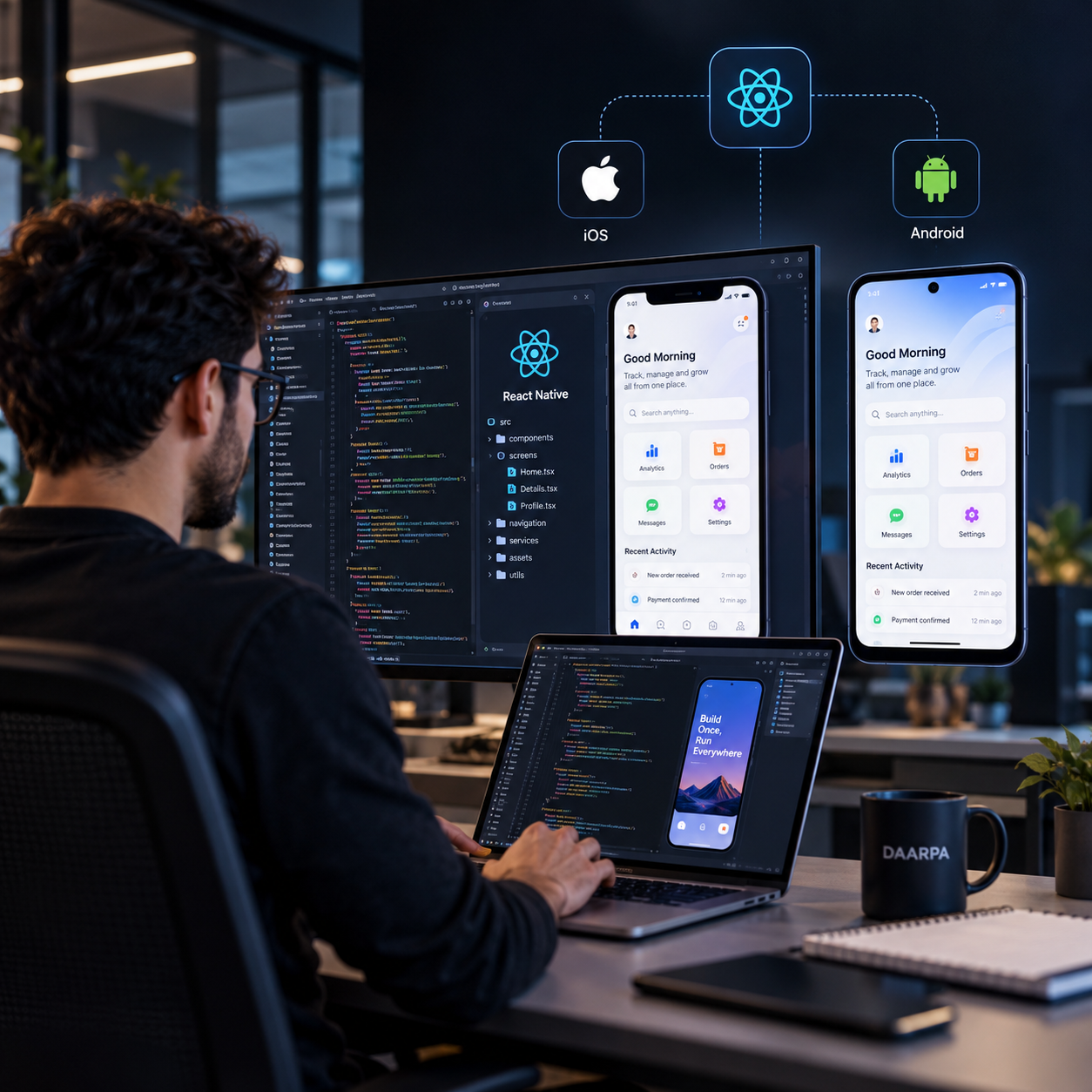
Supporting multiple mobile platforms should not mean doubling development complexity. We identify which parts of your product can share technology, logic and components while preserving the behaviours users expect from their individual devices.
Our approach to cross-platform mobile development considers the complete application ecosystem. Interface components, backend services, APIs, authentication and business logic are planned together to reduce unnecessary duplication and simplify future development.
Whether you are launching a new product or expanding an existing platform to mobile, we select the cross-platform technology according to your functionality, performance requirements and long-term roadmap.

We examine your users, required functionality and platform expectations before recommending the most appropriate development approach.
We establish how shared application logic, platform-specific functionality and backend services will work together.
The application is engineered around the agreed foundation and tested across the devices and operating systems it needs to support.
We prepare each platform for release and establish a maintainable foundation for future functionality.
Cross-platform mobile development uses technologies that allow suitable application code and components to support more than one operating system. It is commonly used to build applications for iOS and Android while maintaining a more unified development foundation.
Both can be effective, but the right choice depends on your existing technology, application functionality, integrations, performance requirements and future roadmap. DAARPA evaluates these factors before recommending a framework.
The product can maintain a consistent brand and overall experience while still respecting platform-specific interaction patterns. We avoid forcing identical behaviour where a platform-specific approach would provide a better user experience.
Yes. Cross-platform applications can integrate with native capabilities when required. The implementation depends on the framework, device functionality and technical requirements of the product.
Potentially. We first assess the existing codebase, functionality, integrations and business objectives to determine whether migration provides enough technical and commercial value compared with continuing native development.